

 czsuliao@czplastics.com
What Plastic is Best for Vacuum Forming?

Among numerous thermoplastic materials, EVA (Ethylene-Vinyl Acetate Copolymer) stands out, particularly in vacuum forming eva applications, due to its unique combination of properties. This article will delve into the material requirements for vacuum forming and reveal why EVA Plastic Sheet is an ideal choice for many applications.
I. Demystifying Vacuum Forming: What Material Traits Are Essential?
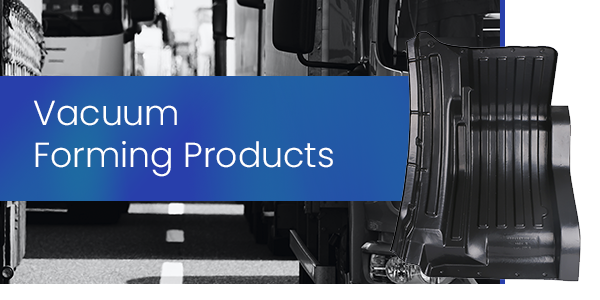
Vacuum forming is a widely used thermoforming process: a plastic sheet is heated until pliable, draped over a mold, and vacuum is applied to pull the sheet tightly against the mold contours. After cooling, the desired shape is achieved. This process has specific demands on the material:
Excellent Thermo-Elongation:
The material must be able to stretch uniformly and significantly when heated, thinning without tearing or developing pinholes. This is crucial for forming complex shapes and deep-drawn products.
Clear Melt Window:
The material needs to maintain a suitable molten state for processing over a broad temperature range (i.e., wide melting window), avoiding overheating degradation or forming difficulties due to insufficient temperature. This reduces process control complexity.
High Elastic Recovery & Dimensional Stability:
After forming and cooling, the material should retain the shape acquired from the mold well, exhibiting low shrinkage and avoiding excessive distortion or warping.
Good Release Properties:
Formed parts should release relatively easily from the mold without sticking.
Ideal Surface Finish:
The material should replicate mold details and offer a smooth, uniform surface suitable for decoration or direct use.

II. Comparing Common Vacuum Forming Plastics: Why Does EVA Stand Out?
Various plastics can be used for vacuum forming, but their performance differs:
HIPS (High Impact Polystyrene):
Pros: Lower cost, easy to form, good surface finish.
Cons: Relatively weaker toughness, impact resistance, and chemical resistance; limited deep-draw capability.
PVC (Polyvinyl Chloride):
Pros: Wide range of rigidity options (rigid to flexible), good flame retardancy.
Cons: Thermal stability requires attention (demanding temperature control), environmental concerns sometimes arise, can become brittle at low temperatures.
PP (Polypropylene):
Pros: Excellent chemical resistance, lightweight, many food-safe options available.
Cons: Relatively narrow melt window requires more precise temperature control; low-temperature impact resistance is generally moderate.
ABS (Acrylonitrile Butadiene Styrene):
Pros: Good strength, toughness, and surface gloss; well-balanced properties.
Cons: Relatively higher cost; deep-draw capability not as good as EVA; low-temperature toughness slightly inferior.
Core Advantages: Exceptional deep-draw capability (superior thermo-elongation), broad melt processing window, excellent low-temperature toughness and impact resistance, good elasticity and resilient cushioning, soft touch at low temperatures, easy colorability, good weather and chemical resistance. These properties make it highly competitive in vacuum forming eva applications requiring complex shapes, high impact protection, or a soft feel.
III. EVA Plastic Sheet: The All-Star Performer for Vacuum Forming
Thanks to its unique molecular structure (adjustable Vinyl Acetate - VA content), EVA Plastic Sheet excels in vacuum forming:
Unmatched Deep-Draw Capability:
EVA exhibits rubber-like high elasticity and ductility when heated, enabling extremely deep draw ratios. It conforms perfectly to molds with complex features, deep cavities, or sharp corners, forming shapes difficult for other materials. It's the prime choice for complex vacuum forming eva products.
Wide Processing Window, User-Friendly:
EVA has a broad thermoforming temperature range, making heating control less critical. This reduces process difficulty, improves production efficiency, and increases yield.
Superior Toughness & Impact Protection:
EVA retains excellent flexibility and impact strength even at low temperatures. This allows vacuum forming eva parts (e.g., precision instrument liners, sports protective gear, tool packaging) to provide outstanding cushioning protection.
Soft Touch & Elasticity at Low Temperatures:
EVA parts typically offer a comfortable, soft feel and good elasticity with quick recovery. This is a major advantage for skin-contact products (e.g., insoles, handle grips) or frequently used components (e.g., packaging inserts).
Good Surface Finish & Process Adaptability:
EVA sheets have a smooth surface, facilitating secondary processes like embossing or printing. Post-forming release is relatively smooth, and dimensional stability is good.

IV. Shining Application Fields for EVA Vacuum Forming
Leveraging these outstanding properties, vacuum forming eva technology is widely used in demanding fields:
Precision Instrument & Electronics Packaging: Customized trays and shock-proof cases for cameras, lenses, measurement instruments, electronic components, providing top-tier cushioning.
Sports Protective Equipment: Helmet liners (cycling, skiing, equestrian), knee/elbow pads, shoe sole/insole components, balancing protection and comfort.
Medical Devices & Rehabilitation Aids: Orthotic components, wheelchair cushions, housings/liners for medical equipment (requiring good disinfection tolerance).
Toys & Creative Products: Puzzle play mats, doll parts, creative models, Cosplay props – easy to form complex shapes, safe, and non-toxic.
Automotive Interiors & Components: Door panel liners, armrest pads, console covers, tool storage box liners.
Premium Consumer Goods Packaging: Cosmetic box inserts, gift packaging boxes, eyeglass case liners, enhancing product value and protection.
V. Choosing a Quality EVA Sheet Supplier: Key to Vacuum Forming Success
The outcome of vacuum forming heavily depends on the quality of the EVA Plastic Sheet. Choosing a reliable supplier requires focus on:
Material Consistency: Stable VA content, Melt Index (MI), and hardness (Shore A or C) across batches ensure repeatable processes and product performance.
Purity & Uniformity: Sheets free of impurities, bubbles, or specks; strict thickness tolerance control; stable, uniform color.
Superior Processability: Sheets should exhibit ideal heating/softening characteristics and stretch flow, ensuring smooth forming during vacuum forming eva, sharp detail reproduction, and freedom from tearing or excessive thinning.
Physical Properties Compliance: Meeting application requirements for hardness, tensile strength, tear strength, resilience, low-temperature performance, etc.
Expert Formulation & Customization Capability: Supplier should adjust formulations and offer custom production based on specific needs (e.g., hardness, color, transparency, special properties like flame retardancy, anti-static).
Stringent Quality Control System: Comprehensive quality inspection processes and standards from raw material intake to finished product shipment.
Conclusion: EVA Plastic Sheet – The Ideal Solution for Complex Vacuum Forming Applications
Returning to the core question, "What plastic is best for vacuum forming?" – while there's no single answer, for applications demanding deep-draw forming of complex 3D shapes, exceptional impact cushioning, low-temperature flexibility, and a comfortable touch, EVA Plastic Sheet undoubtedly stands out as a top performer. Its demonstrated deep-draw capability, wide processing window, outstanding toughness, and elasticity in vacuum forming eva processes make it an irreplaceable material in numerous engineering and consumer goods fields.
Success hinges on selecting high-quality EVA Plastic Sheet and a professional, reliable supplier. Changzhou Plastics is deeply rooted in the field of high-performance polymer sheets, specializing in providing premium EVA sheets that meet the stringent demands of vacuum forming eva processes. We utilize selected raw materials and optimized formulations, manufacturing sheets via precision temperature-controlled extrusion lines to ensure exceptional thermo-elongation, consistent physical properties, and perfect surface quality. We understand the challenges of vacuum forming and offer expert technical support and customized solutions to help bring your designs to life perfectly.
If your project requires outstanding vacuum forming results, contact Changzhou Plastics today. Let our professional EVA Plastic Sheet be the reliable backbone of your innovative manufacturing!