

 czsuliao@czplastics.com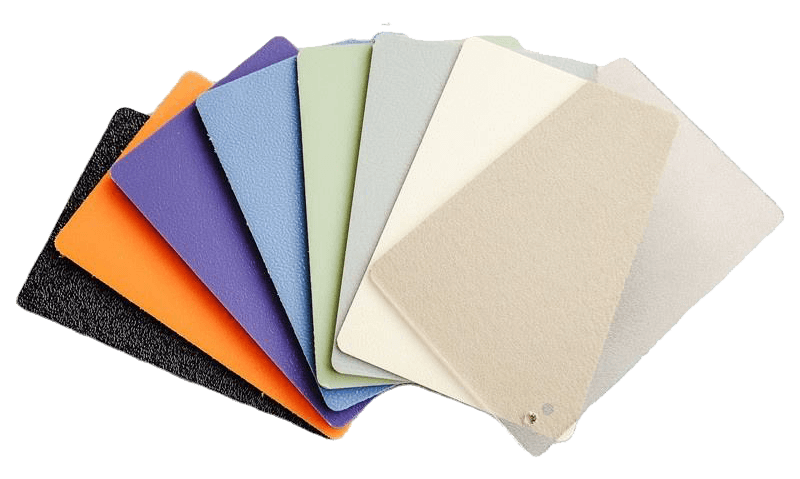
How strong is a 3mm acrylic sheet?

In industrial design and manufacturing, material strength is a critical factor determining product durability and safety. When comparing 3mm acrylic sheets with ABS plastic sheets, users often focus on impact resistance, load-bearing capacity, and application scenarios. This article uses 3mm ABS plastic sheet as the core focus, analyzing strength variations across different thicknesses (e.g., 1mm ABS plastic sheet, 2mm ABS plastic sheet, 10mm ABS plastic sheet) and surface treatments (e.g., ABS textured plastic sheet). We also highlight the expertise of ABS plastic sheet manufacturer Changzhou Plastics to help users make informed decisions.
1. Material Strength Fundamentals: The Molecular Advantage of ABS
ABS plastic (acrylonitrile-butadiene-styrene copolymer) combines the chemical resistance of acrylonitrile, flexibility of butadiene, and rigidity of styrene. This tri-polymer structure ensures high impact resistance even in thin sheets (e.g., 1mm ABS plastic sheet). As thickness increases (e.g., 2mm ABS plastic sheet, 3mm ABS plastic sheet), bending strength and load capacity improve significantly.
Comparison with Acrylic:
While 3mm acrylic sheets offer high transparency and surface hardness, they are brittle and prone to cracking under impact. In contrast, 3mm ABS plastic sheet absorbs shock energy through its butadiene component, reducing fracture risks.
2. Thickness Impact on Strength: A Gradient Analysis (1mm–10mm)
Thin Sheets (1mm–2mm)
1mm ABS plastic sheet: Ideal for lightweight structures (e.g., electronic enclosures, decorative panels) with 25MPa bending strength.
2mm ABS plastic sheet: Upgraded to 40MPa, suitable for toolboxes and display stands.
Medium Thickness (3mm)
3mm ABS plastic sheet peaks in impact resistance (20kJ/m²), outperforming acrylic (5kJ/m²). This makes it a top choice for industrial components and protective covers.Thick Sheets (10mm)
10mm ABS plastic sheet offers maximum load capacity but at higher weight and cost, typically used for mechanical bases and large signage.
3. Surface Treatment Enhancements: The Role of Textured Designs
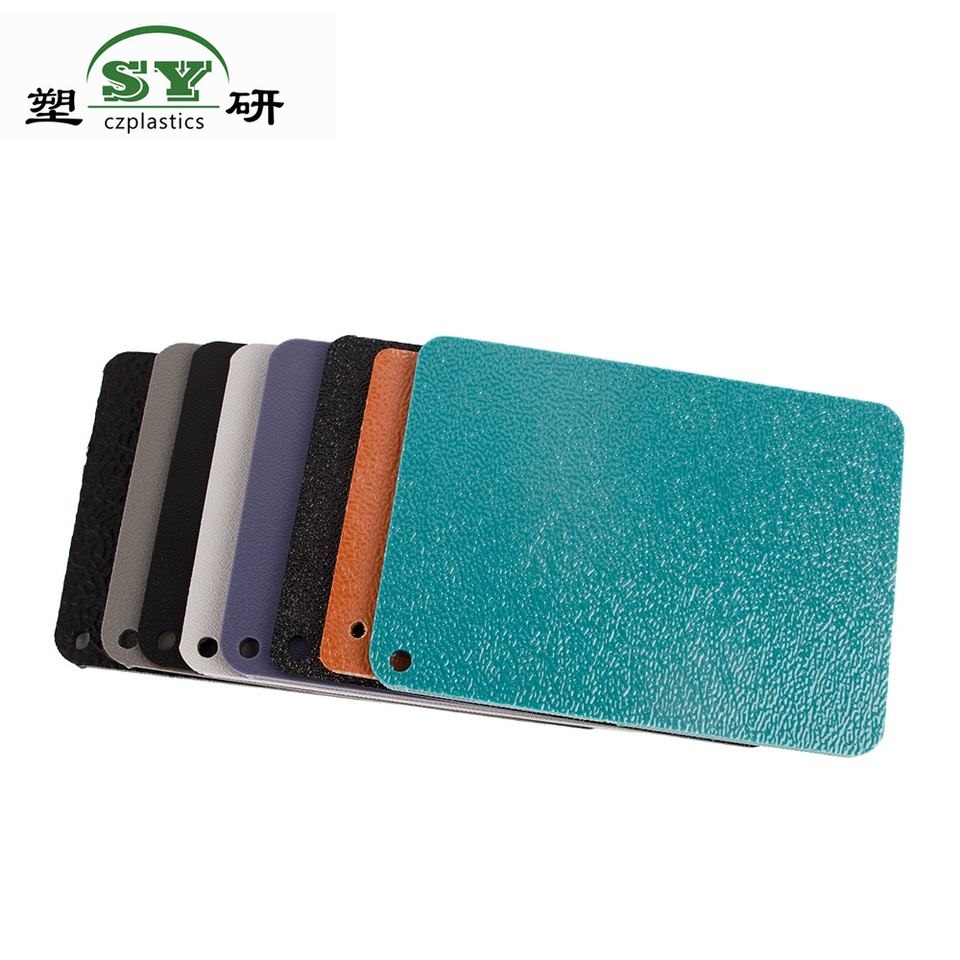
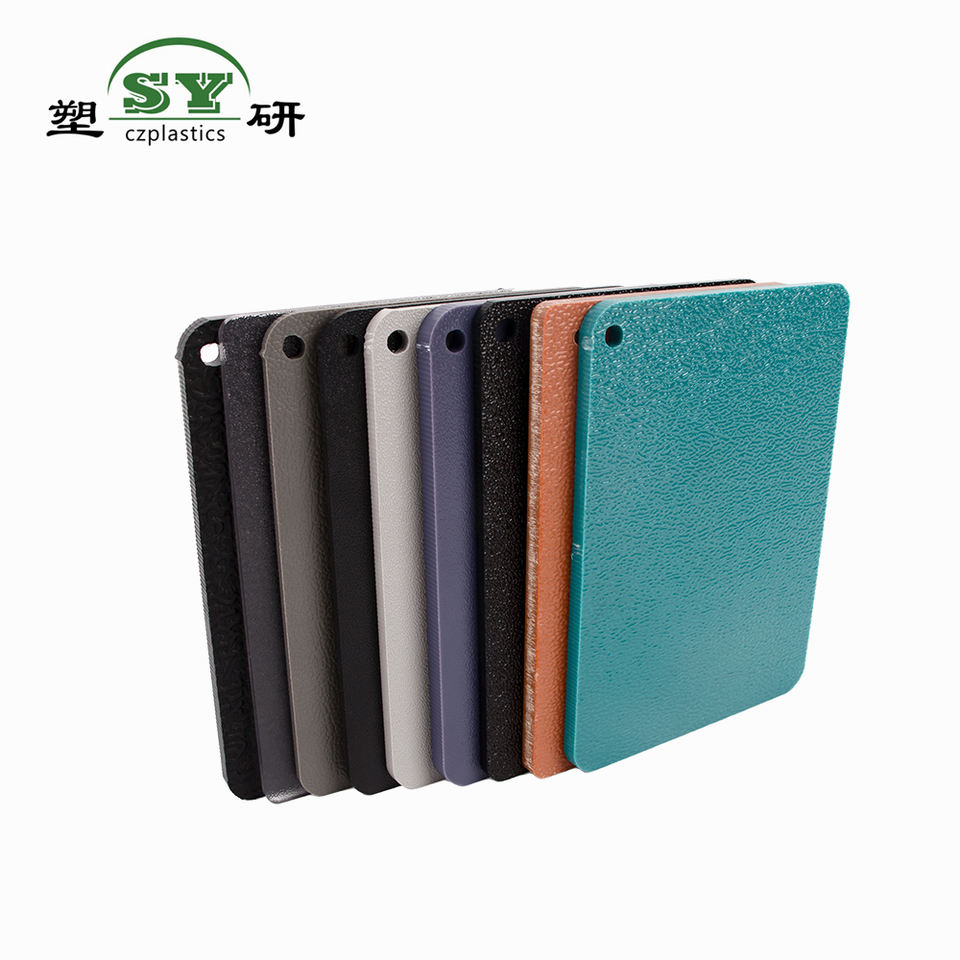
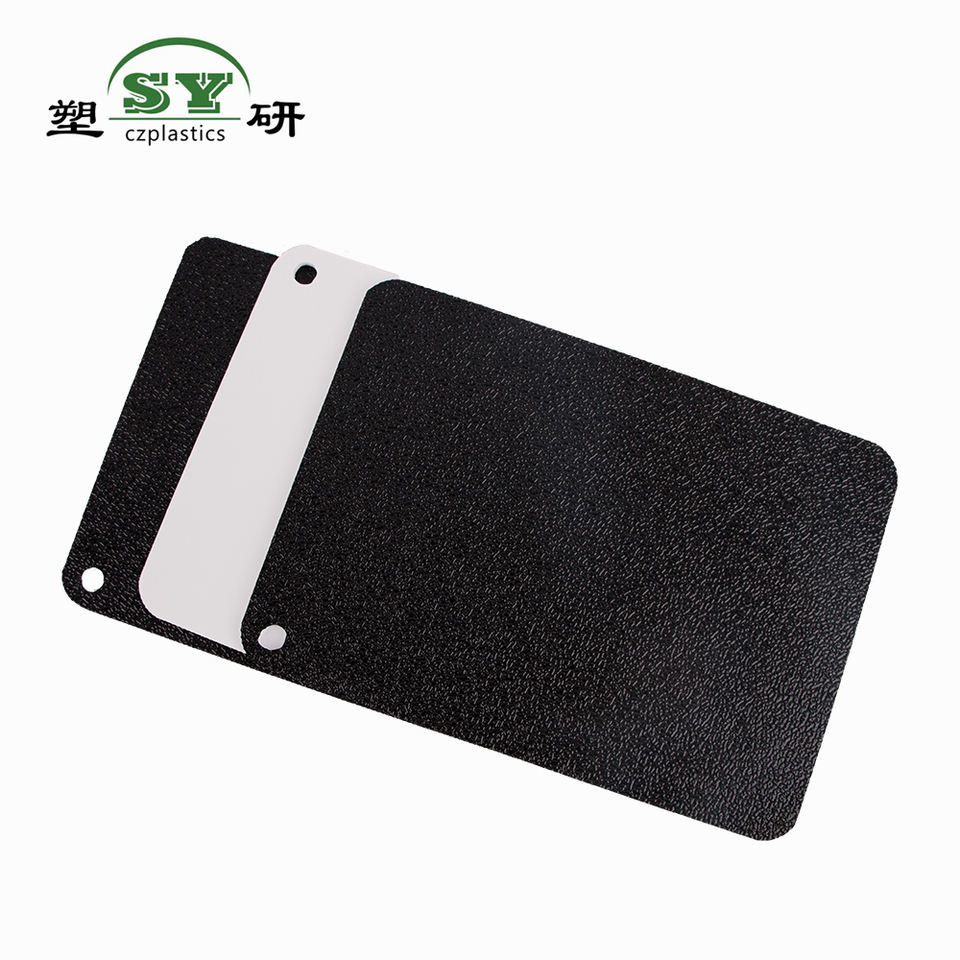
ABS textured plastic sheet improves slip resistance and aesthetics while distributing stress across a larger surface area. For example, outdoor equipment housing with textured ABS reduces cracking risks from localized pressure.
4. Manufacturing Excellence: Why Quality Matters
As a trusted ABS plastic sheet manufacturer, Changzhou Plastics ensures:
Co-extrusion technology for uniform layer distribution (hard ABS surface + foamed ABS core).
Precision thickness control (±0.05mm tolerance) to eliminate weak spots.
Raw material traceability using top-tier ABS resins from BASF and LG Chem.

5. Selection Guide: Matching Thickness to Application Needs
| Application | Recommended Thickness | Key Advantages |
|---|---|---|
| Electronic enclosures | 1mm–2mm | Lightweight, easy fabrication |
| Industrial protective covers | 3mm | High impact resistance, chemical-resistant |
| Large structural supports | 10mm | Heavy-load capacity, low creep |
| Outdoor anti-slip floors | ABS textured | Slip-resistant, stress-dispersing |
6. FAQ: Your Top Questions Answered
Q1: Is 3mm ABS stronger than 3mm acrylic?
A: Yes. 3mm ABS plastic sheet (20kJ/m² impact strength) outperforms acrylic (5kJ/m²), making it more fracture-resistant.
Q2: Do I need 10mm ABS for higher strength?
A: Not always. Optimize with ABS textured plastic sheet for stress distribution or reinforced structures instead of overall thickness.
Q3: How much stronger is 2mm ABS vs. 1mm ABS?
A: Bending strength increases by ~30–50% per 1mm thickness. For example, 2mm ABS plastic sheet (40MPa) suits light tools, while 3mm ABS plastic sheet (60MPa) handles heavier loads.
Q4: Does temperature affect ABS strength?
A: ABS remains stable between -20°C and 80°C. Extreme cold (<0°c) reduces="" impact="" resistance="" by="" while="" heat="">60°C) may cause creep. Use modified ABS for extreme conditions.
Q5: How to check ABS quality?
A: Inspect for dense, bubble-free cross-sections (±0.05mm tolerance), slow rebound when bent, and mild resin odor. Request third-party test reports for verification.
7. Conclusion: Why Choose Changzhou Plastics?
Whether you need 1mm ABS plastic sheet for lightweight solutions, 3mm ABS plastic sheet for industrial-grade durability, or custom-textured surfaces, Changzhou Plastics delivers tailored, high-performance materials. Contact us today for free samples and expert guidance!